
How Does a Jet Engine Work?
What are the Types of Jet Engines?
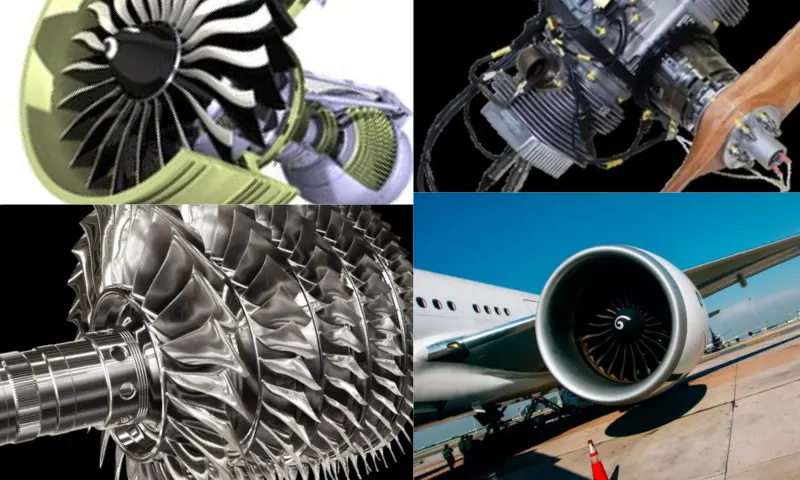
Jet engines are powerful and efficient engines used in aviation and industrial applications. These engines are found in airplanes, helicopters, missiles, and some industrial machinery. A jet engine generates thrust by using the high-speed gas produced by the combustion of air and fuel contained within it. The basic principle of operation of jet engines is that the high-pressure gas resulting from the combustion of air and fuel mixture rapidly exits the rear of the engine. This expulsion creates a thrust that propels the vehicle or machine forward. Jet engines are called internal combustion engines because combustion takes place inside the engine. You can visit the website https://www.tei.com.tr/urunler/tei-tj90-turbojet-motoru for detailed information about jet engines.
What are the Basic Principles of a Jet Engine?
Jet engines are classified into different types such as turbojet, turbofan, turboprop, and ramjet. Turbojet engines are used to reach high speeds due to their high air compression ratios. Turbofan engines provide more thrust and fuel efficiency by using a larger airflow. Turboprop engines operate effectively at lower speeds and altitudes through propeller systems. Ramjet engines are generally used in vehicles that are in continuous motion at high speeds. A jet engine is essentially a sophisticated machine involving the stages of air intake, compression, combustion, and exhaust. The first stage is the engine taking in air. Then, the ingested air is compressed by a compressor, increasing its pressure and temperature. Another stage is the combustion process by adding fuel to the compressed air. This combustion occurs at high temperatures and pressures. The resulting high-speed gases extract energy by rotating a turbine. These gases exit rapidly, creating thrust and moving the vehicle. Jet engines provide effective and powerful propulsion by operating on these fundamental principles.