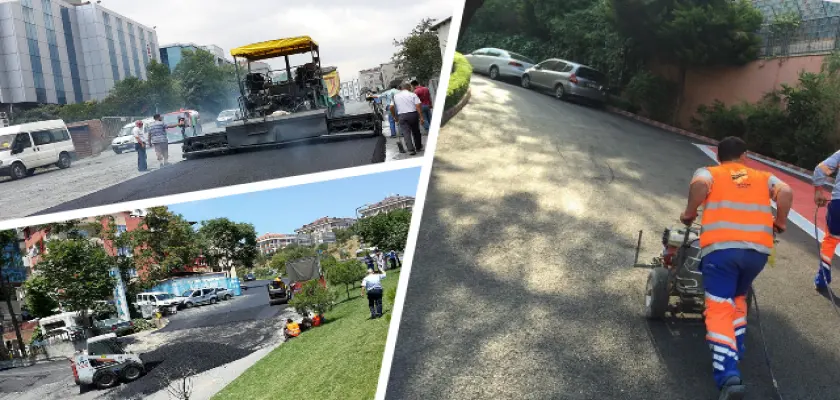
Reasons for the Popularity of Asphalt Use
Just like the living conditions in the modern world, the spaces we inhabit can also change. While this leads to many innovations that positively impact human life, it also causes changes in our habits and preferences. Floor coverings, one of these innovations, enable us to have the desired standards in outdoor spaces and allow us to benefit from faster transportation. In this sense,
asphalt road construction materials are one of the details of great importance and necessity in human life due to their usability, functionality, and long-lasting structure. Although not paid much attention in daily life, the asphalt used is among the most important elements that beautify people's living spaces and provide them with easier access to transportation. Throughout history, many different road surfaces have been tried, but they have been abandoned over time because some were too costly and others were unusable.
Asphalt Use Extends Road Lifespan
There are many reasons why asphalt road construction is preferred for both intercity and intracity roads. However, the most important of these is its long-lasting structure. When prepared appropriately, asphalt can provide road resistance by expanding in hot weather and solidifying in cold weather. Therefore, it can be used safely for many years as it is not significantly affected by the pressure from vehicles or by potential impacts and damaging elements. Additionally, it includes economical maintenance conditions because any damage or deterioration on the road can be repaired in a short time. Due to these advantages, it is the most widely used outdoor floor covering material. Asphalt road construction, one of the oldest and most preferred products today, is chosen because potential negativities are minimized, and it remains one of the most economical solutions. This type of flooring structure is obtained by combining various mixtures and preparing them at appropriate densities. This reduces possible adverse outcomes and results in a more durable structure.