
How Do Fish Reproduce?
How Do Fish Reproduce?
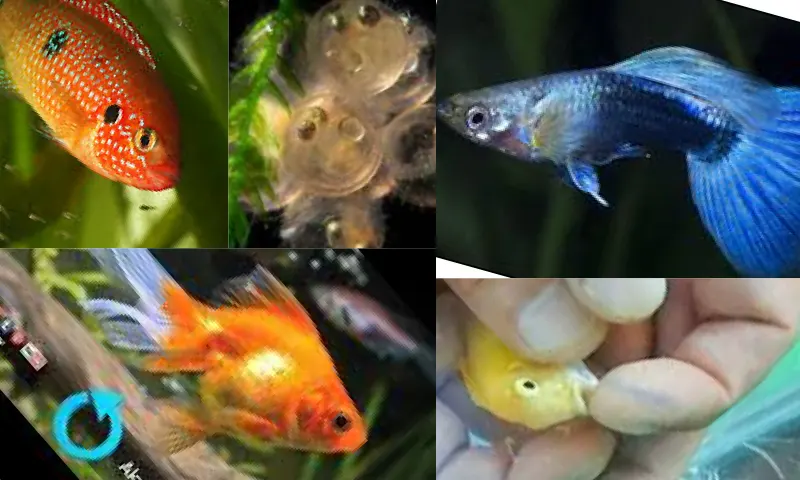
Fish are vertebrate animals that live in water, use their gills for respiration, and generally have scales. Fish are creatures with countless species in the animal kingdom. They live in areas such as seas, oceans, rivers, and lakes. The oldest fish fossil is 500 million years old. Their hearts consist of an atrium and a ventricle, and their hearts always contain deoxygenated blood. Deoxygenated blood is purified through the gills, and clean blood circulates in the body as a result of respiration. While freshwater fish do not drink water, saltwater fish are known to drink water. They have paired fins on their chest, while they have single fins on their back and tail. According to studies, there are more than 40,000 species of fish. Fish are also differentiated by their feeding habits. They are vertebrate animals that feed in three ways: carnivorous, herbivorous, and omnivorous. Living beings on Earth are biologically driven to reproduce. This is inherent in the nature of living things. Most fish species reproduce by laying eggs. There are also mammal fish species that give birth. Let's talk about fish that reproduce by laying eggs. Fertilization in fish occurs in water. Female and male fish send signals to each other. Among the fish where signal communication is successful, the female lays her eggs in suitable places found in the water. In some fish species, male fish can create a suitable nest where eggs can be laid before fertilization. Female fish lay their eggs in these safe nests prepared by male fish. Male fish then come to the laid eggs and release their sperm to fertilize the eggs. Both sides try to ensure the safety of the eggs until they develop. Protection can also fail due to currents, attacks by other fish, and creatures. Fish that reproduce by laying eggs are also called oviparous.
Surprising Facts About Fish
Fish generally reproduce seasonally. Each fish species has a different breeding period. The number of eggs they lay varies by species. Trout lay around 1000-1500 eggs, while carp can lay approximately 300,000 eggs. Among fish, species like guppies and mollies reproduce by giving birth, but this differs from what we know as giving birth. The development and fertilization of the offspring still occur with eggs. The female fish receives sperm through an organ called the Gonopodium, which acts as a penis, and fertilizes the egg in her womb. The offspring hatches from the egg inside the mother's womb, and the egg, or offspring, is expelled from the mother's womb. Although fish generally multiply by laying eggs, some fish species reproduce by giving birth. These are mammal creatures that live in water. Sharks, whales, dolphins, and seals are mammal creatures that live in water and reproduce by giving birth.
- Rougheye rockfish can live up to 205 years and are the longest-living fish species known.
- Whale sharks are the largest fish species. They can weigh up to 21 tons 500 kilograms and reach lengths of 16 meters.
- Black marlins are the fastest fish, reaching speeds of up to 130 kilometers per hour.
- Lanternfish are the most abundant fish species on Earth and live in freshwater sources.