
Office Chairs
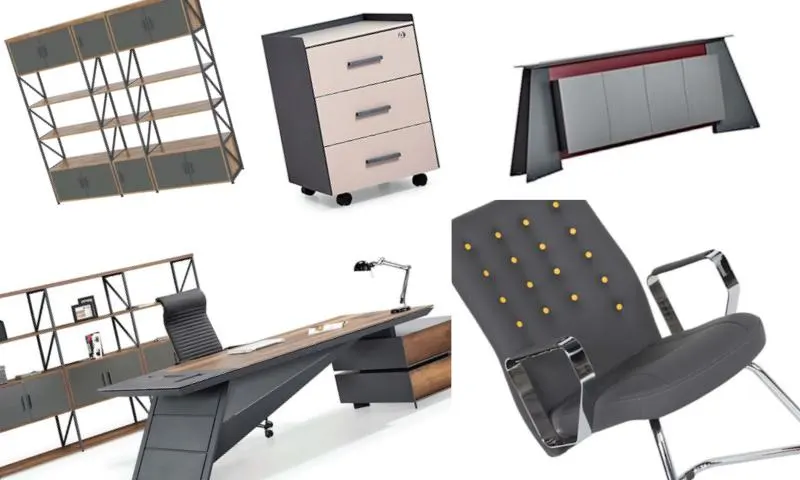
Chairs have many varieties among themselves; dining chairs, home chairs, garden chairs, camping chairs, office chairs, etc. The chairs used in offices today are called office chairs. The difference of these chairs from other seating elements is to provide comfort by ensuring that the employee who works while sitting for long periods does not experience body pain, to prevent restriction of movement with their width and rotating wheels, and to facilitate the user's positioning with their ability to lean left, right, forward, and backward. Office furniture sold at [website address] has various height adjustments to ensure that the user's feet are flat on the ground and their thighs are parallel to their knees at a 90-degree angle. For this reason, office chairs require better engineering and craftsmanship compared to other furniture.
Things to Consider for Office Chairs
• When sitting in the chair, it is necessary to maintain the natural curve of the back to position the body correctly and healthily. The lumbar curve can be adjusted correctly with the protrusions or lumbar supports located on the back of office chairs.
• Some office chairs have a reclining feature to create a slight 90-degree angle for the lower body.
• Depth is very important in office chairs. If the seat is too deep, pain and numbness in the legs may be felt due to pressure behind the thighs, and health problems may arise. If the seat depth is less than required, the legs will not be adequately supported.
• The wheels used on office chairs and other office furniture must be chosen correctly. Incorrectly chosen wheels can cause various deformations on the floor. The correct wheel selection is soft wheels for chairs to be used on hard floors, and hard wheels for chairs to be used on soft floors.
• Armrest office chairs help reduce pressure on the lower back. Additionally, armrests with adjustable height and width provide comfort by making various tasks easier.





