
WHAT ARE PIPE BENDING DIES AND THEIR FUNCTIONS?
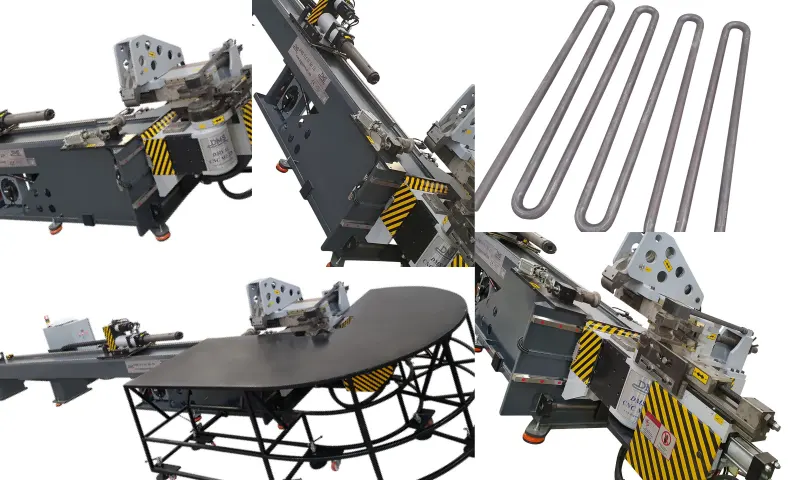
Information About Pipe Bending Dies
Pipe bending dies, which have different functions, are one of the most effective tools used in metal pipe shaping. All these systems are supplied by expert manufacturing firms in the field, such as . These systems, used in pipes based on automation, are highly functional. You can get more information about automation-supported machines with pipe bending dies, which is the name given to the entirety of the equipment necessary for pipe bending to occur. The dies, arranged for pipes of different dimensions, consist of several parts.
Jaw and Slide in Pipe Bending Dies
Each part in the pipe bending dies has a different function. It is also possible for the die arrangement to change according to the material change. The first part of the systems that can be reshaped depending on variables such as the type of pipe material, wall thickness, and radius is the die, i.e., the roller. The equipment on which the pipe is wound during the bending process is called a roller. Generally, the roller, which slides on the table, is placed in the area by sliding. The amount of inclination at the end of the bend can be easily calculated in the roller, which is necessary for the bending process to occur without the pipe slipping. In the dies used in pipe bending processes, the jaw part prevents the metal from moving independently of the die during the bending process. By preventing the pipe from slipping, the bending process is ensured to occur smoothly. Another part that moves with the pipe and rests against it in systems that function as a kind of clamp is called a slide. The slide part, which best resists the force exerted by the pipe, prevents the pipe from deforming during bending.
Spoon and Mandrel in Pipe Bending Dies
The spoon, which prevents the pipe from deforming during bending, is quite effective on radiused bends and pipes with thin wall thickness. The spoon, generally used on large-diameter pipes, allows the pipe to be bent without deformation. The spoon part within the pipe bending dies, which helps the pipe slide from the inner radius, prevents possible deformation, is followed by the mandrel part, which prevents deformation by sliding the pipe from the outside.